What does "lieudit" mean on a bottle of French wine? YouTube
How to say 'what does that mean?' in French Learn French fast with Memrise YouTube

Anyone doing French-Canadian genealogy eventually runs across "dit" (pronounced "dee") names. Meaning "called," the "dit" name functioned like an alias or a second surname. It could be used together with the regular surname or as a substitute. Sometimes the "dit" name was not necessary and was left out of certain records. Not all French-Canadian individuals Read More
What exactly do diacritical marks mean in French? French, French conversation, French language

Don't worry if you run across French ancestors who seem to have two last names with the word dit (pronounced "dee") in the middle, as in Jacques Demet dit Beaulieu. The second surname is called a dit name (dit is French for "called" or "said").Dit names differentiated branches of a family, making the names handy for keeping track of a large clan.
What is the meaning of "ça te dit?"? Question about French (France) HiNative
In the context of genealogical research, "dit names" can be seen as a second family name given to an individual. To illustrate the phenomenon, we can use Roy dit Desjardins, a frequent "dit name" combination. If you come from the Roy dit Desjardins line, your ancestors may have been named Desjardins, Roy and Roy Desjardins over the.
What Does Love Language Mean In French

Lieu-dit ( French pronunciation: [ljø.di] ⓘ; plural: lieux-dits) (literally location-said) is a French toponymic term for a small geographical area bearing a traditional name. The name usually refers to some characteristic of the place, its former use, a past event, etc. A lieu-dit may be uninhabited, which distinguishes it from an hameau.
What does "lieudit" mean on a bottle of French wine? YouTube

Genealogy is fun. Here is a partial list of common dit names and their equivalents [note: source unknown]. You can also find extensive lists of dit names in the sources Jette and Tanguay. Acelin - Asselin. Agnier - Haguenier. Alarie - Lart. Albert - Beaulieu. Allaire - Daillaire. Amiel - Miel.
“Si” in French — What does it mean? YouTube

At the end of our last lesson, we introduced the question ça te dit (or ça vous dit), which literally means "does it say/speak to you," but is mostly used as an informal way of proposing something to someone.It's more or less equivalent to the English phrase "what do you say": Du coup, je propose un apéro ce soir chez moi, dix-neuf heures.
Pin on French

When researching French ancestors you might come the word dit (pronounced "dee") as part of a name. For example, Jacques Demet dit Beaulieu. Dit just means "called" or "known as." It indicates an alternate surname that helps differentiate people. These additional names could be based on a physical trait, location or occupation.
What exactly do diacritical marks mean in French? French language lessons, How to speak french

A dit name is essentially an alias, or alternate name, tacked on to a family name or surname. Dit (pronounced "dee") is a French form of the word dire, which means "to say," and in the case of dit names is translated loosely as "that is to say," or "called." Therefore, the first name is the family's original surname, passed down to them by an.
What Is a Dit Name in French Canadian Genealogy?
/Bonickhausen-Dit-Eiffel_naissance-1832-58bad55d5f9b58af5cb8d4d5.png)
Quoting from Denis Beauregard's article from Francogene.com. "A "dit name" is an alias given to a family name. Compared to other alias or a.k.a. that are given to one specific person, the dit names will be given to many persons. It seems the usage exists almost only in France, New France and in Scotland where we find clans or septs.".
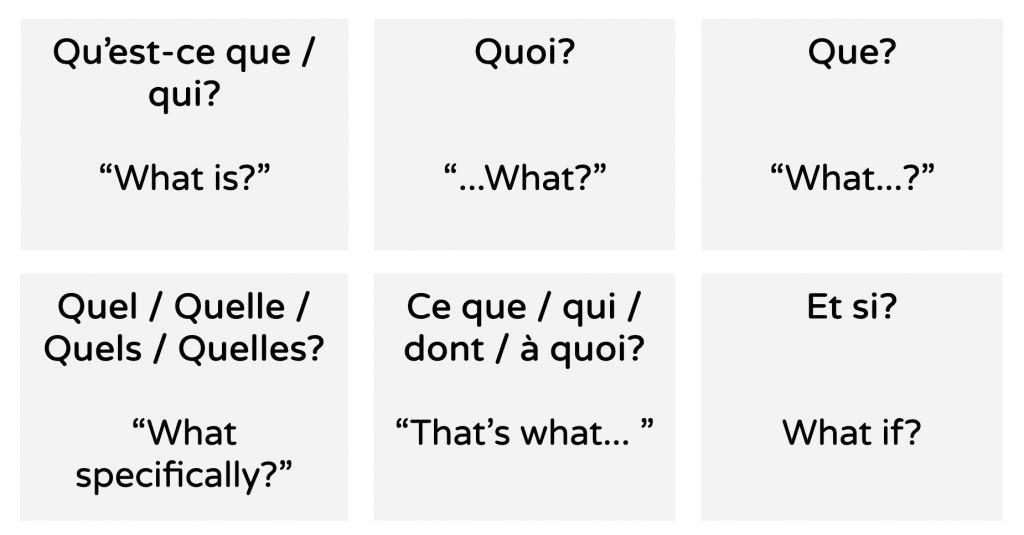
The 6 Ways to Say What in French — Simplified!
The French word dit translates in English to the word 'said'. What does this mean?, well, different things to different researchers. The term dit to some researchers is translated to a.k.a., also known as; to some it translates as 'nickname'; some translate it as 'alias'; while others translates it as 'distinguisher'.
Ça te dit Meaning & Example in a Sentence Romantic French Phrases, Common French Phrases

After posting Part I of the 'Tracing my French Canadian Ancestry' saga, I realized not everyone may understand a very normal aspect of French Canadian genealogy - that little word so often seen in Quebecois records: dit.. Perhaps you are one of the many who descend from a 'Roy dit Desjardins', or perhaps you share my 'Létoile dit L'Italien' or my 'Miville dit Deschênes.
Ditesle en français • Say it in French • /dit lə ɑ̃ fʁɑ̃.sɛ/ Did you know that this was the

Dit names For French-speaking Canadians, dit names (pronounced "dee") are often part of the surname. For example, Jean Duprés dit cultivateur, means Jean Duprés, the farmer. The word dit (feminine: dite) means "also known as," from the verb dire (to say). A dit name is an alias added to a family name, and is also called a nickname
How do i ask about the meaning of something in french e.g “what does black mean in french
Google's service, offered free of charge, instantly translates words, phrases, and web pages between English and over 100 other languages.
Pin by Cecile Jng on Französisch Basic french words, French flashcards, French classroom

Often it was the nom dit, especially as time went on. Eventually, many dit names did become the surname, like my De Nevers dit Boisvert line, which permanently became Boisvert in the mid-1700s. The practicestarted to wane around the 1850s, with people choosing one name. Because people could use one or the other or a surname with a ditname, when.
Pin by Rachel Corwin on French French vocabulary, Basic french words, French language

These nicknames were based on the following: actions (Ladébauche, Ladéroute). Until around the 1850s, both surnames and "dit names" were used in records. After that time, only one of the two names was used. Lists of "dit names" and their associated surnames can be found in the publications and websites that follow:
What do these abbreviations mean in this English/French dictionary? r/languagelearning
DIT translate: also known as, appointed. Learn more in the Cambridge French-English Dictionary.